- Home
- Integrations
- Traces
Traces
Traces are detailed records of the complete path of a message in an integration flow, showing the processed steps, the components involved, and the execution times. They are essential for debugging, performance analysis, and identification of bottlenecks in the system.
In Sensedia Integrations, trace viewing is available from the Executions screen, by clicking the  icon.
icon.
IMPORTANTTraces are only available for flows with deployment in Full mode (Canvas and Diagram & Source Code type flows).
Enabling traces in Access Control
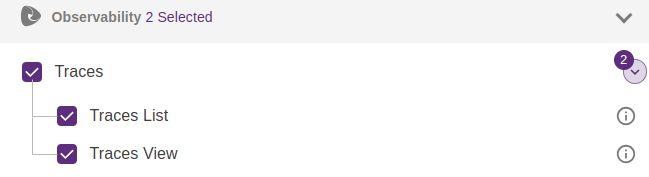
To enable trace viewing, when creating a policy (role) in Access Control, you must add the Observability permission group and select:
- Traces
- Traces List
- Traces View
The trace viewing option is visible only for executions performed after the traces feature has been enabled.
See how to create a policy (role) and enable permissions in Access Control.
When selecting the trace viewing option on the Executions screen, you will see the Trace Detail screen.
Trace detail
The Trace Detail screen provides detailed traces of all steps of an integration flow. It allows you to view relevant information for monitoring and debugging executions, detailing attributes and metrics.
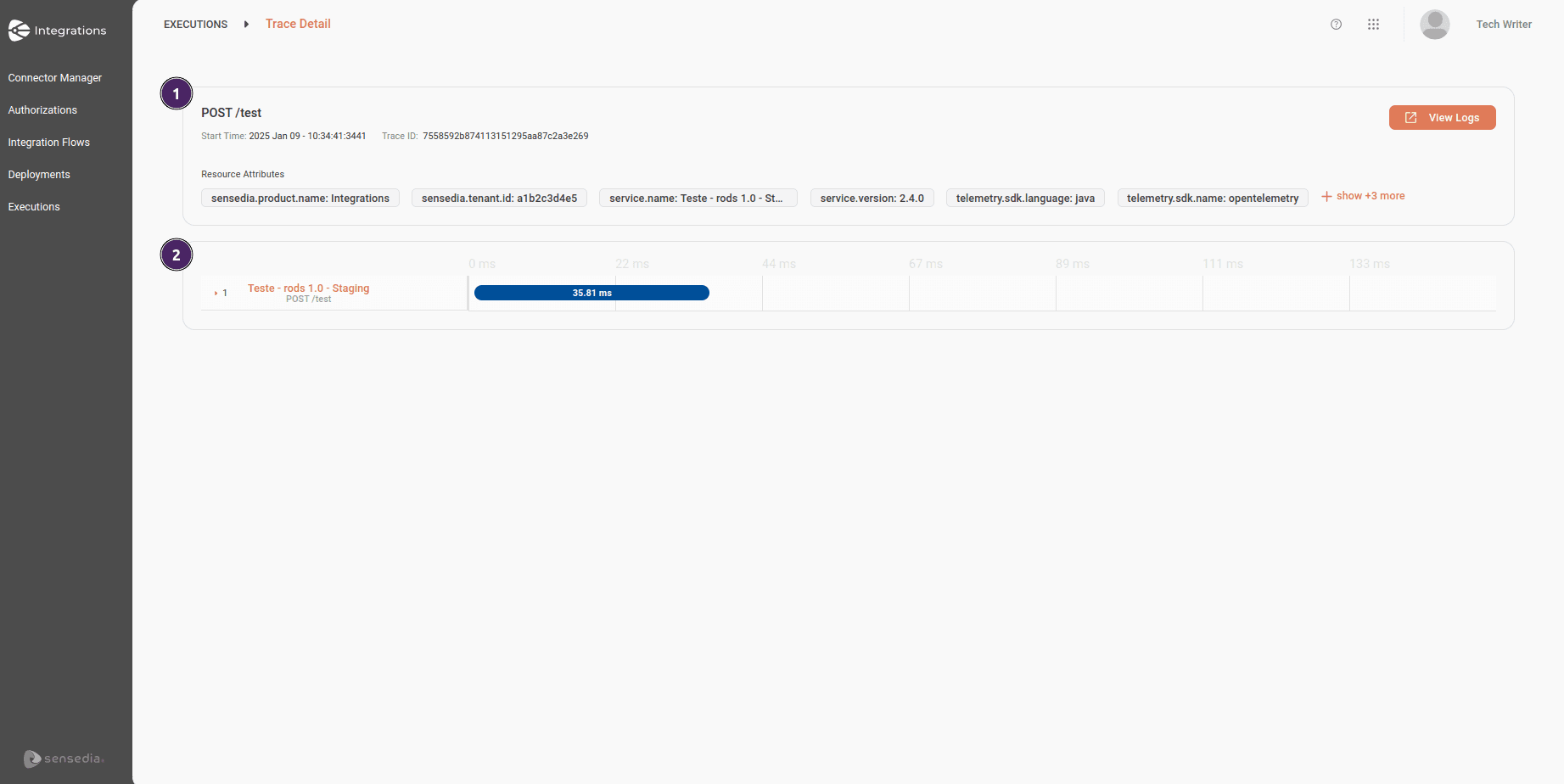
1. Flow trace overview
This section presents a summary with the main details of the trace.
-
Title: name associated with the initial step of the integration flow, the trigger.
-
Start Time: date and time of the start of the integration flow execution.
-
Trace ID: the unique identification of the integration flow trace.
-
View Logs: allows you to view the flow logs in Sensedia Analytics.
-
Resource Attributes and Span Attributes:
-
Resource Attributes: describe the environment and components involved in the execution of each step within an integration. These attributes provide contextual details about the system and help identify the resource responsible for execution, such as the product name, tenant identification, service name and version, etc.
-
Span Attributes: describe what was performed in each step and provide context for performance analysis or problem diagnosis, such as the URI of the endpoint used in the step, the Camel component responsible for execution, the HTTP method used, etc.
-
NOTETo view the complete list of Resource Attributes and the list of Span Attributes, click + show more, highlighted in red (located at the end of the resource attributes line). When you click, the information will be displayed on the right side of the screen.
2. Execution Time
The first bar in the graph represents the trace of the complete flow, indicating the total execution time.
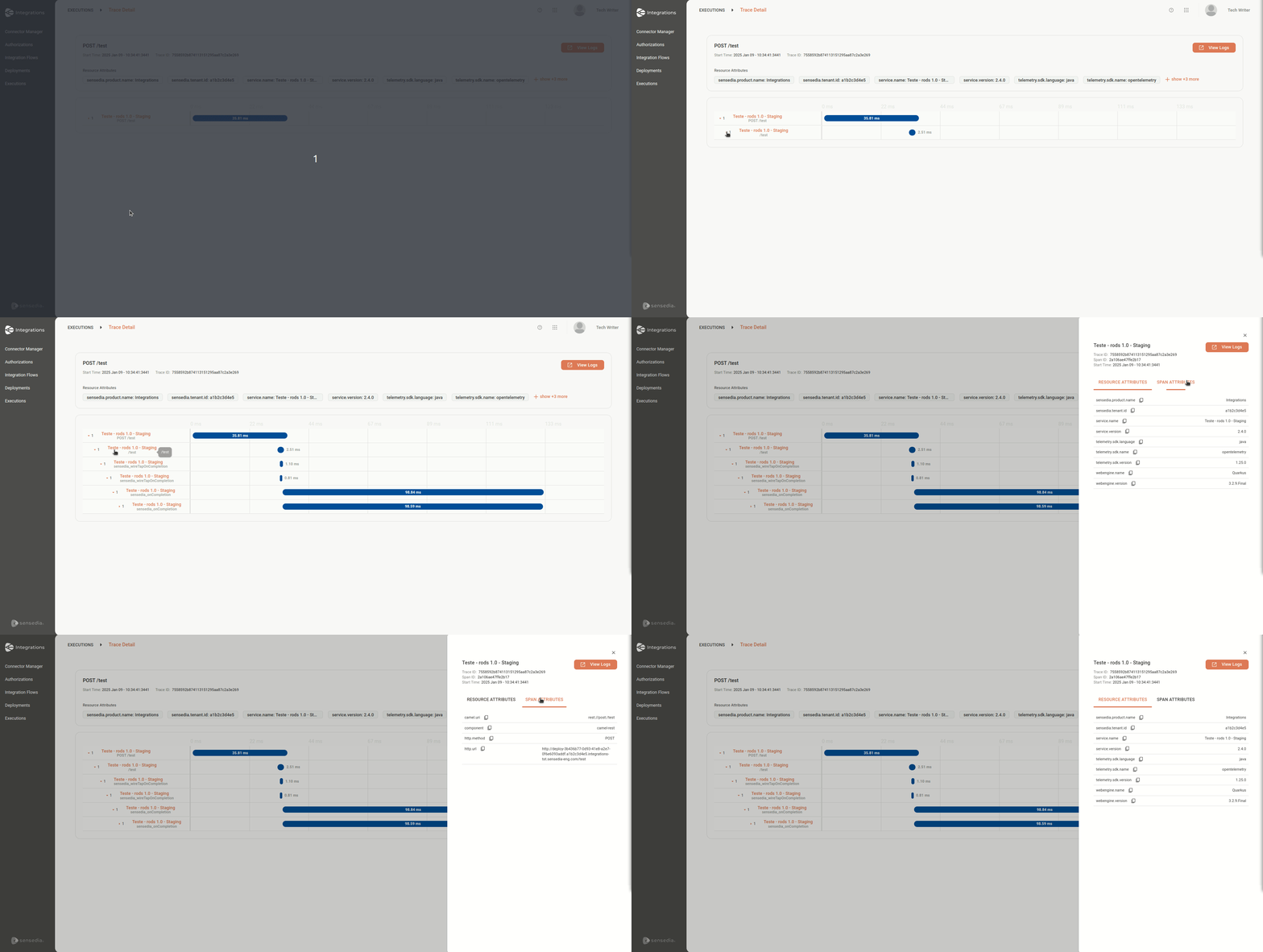
To view the steps individually with their respective execution times, click the expansion arrow  to the left of each one.
The bars are organized hierarchically, one below the other, detailing the duration of each step.
to the left of each one.
The bars are organized hierarchically, one below the other, detailing the duration of each step.
By clicking on any bar or step, you can view the corresponding Resource Attributes and Span Attributes. If you wish, you can also view the logs of each step in Sensedia Analytics, by clicking View Logs.
TIPTo better identify which step the trace line belongs to, check the information in the "camel.uri" and "component" fields in the Span Attributes tab.
See in the animation how to view Resource Attributes and Span Attributes of a step.
NOTEThe bars with the nomenclatures below correspond to asynchronous events that occur internally in the context of integrations:
- "sensedia_wireTapOnCompletion"
- "sensedia_onCompletion"
- "sensedia_commonNotificationRoute"
- "aws2-sns"